India’s Mixed Realty Trends: Under Construction Properties Rise in Pune, While Mumbai Sees More Ready Homes
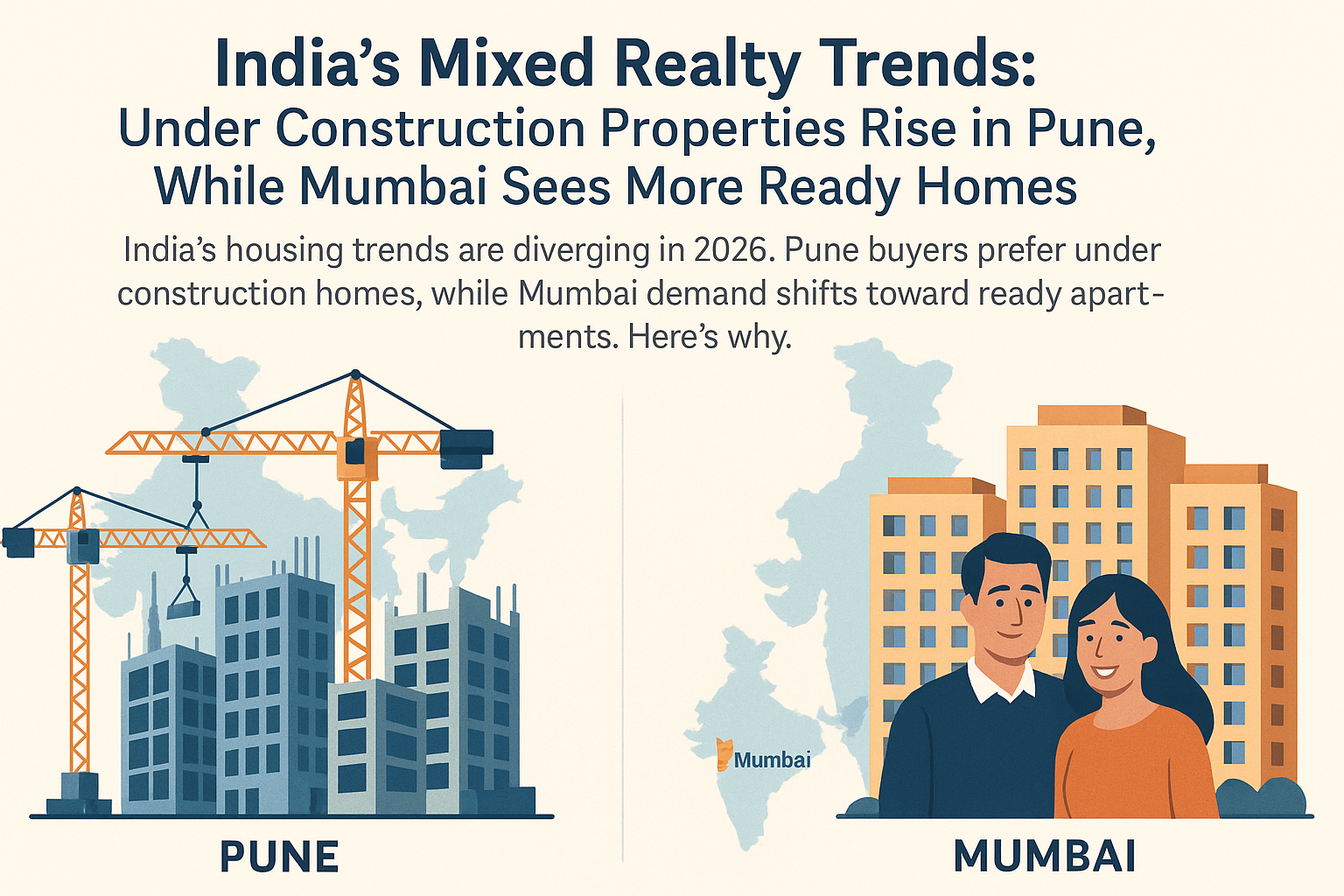
India’s real estate market in 2026 is no longer moving in one direction. Instead, it is fragmenting into city specific trends driven by buyer maturity, affordability, infrastructure readiness and lifestyle expectations. Two cities that clearly illustrate this contrast are Pune and Mumbai.
In Pune, under construction properties are gaining strong traction. Buyers are comfortable waiting, betting on future growth and leveraging lower entry prices. In Mumbai, the preference is shifting decisively toward ready homes. Buyers want certainty, immediate usability and established neighbourhoods.
This divergence is not accidental. It reflects how each city has evolved and what buyers value most today. Many buyers begin understanding these shifts through the India home buyers guide, which explains why different markets mature at different speeds.
This article explores why under construction properties are rising in Pune, why Mumbai buyers prefer ready homes and what these mixed trends reveal about India’s real estate future.
Why Indian Real Estate Is No Longer One Size Fits All
For years, Indian real estate trends were broadly similar across metros. Buyers chased new launches, expected appreciation and tolerated delays. That mindset has changed.
Buyers today are more informed. They evaluate risk, cash flow, livability and resale prospects carefully. As a result, cities with different affordability levels and development histories are witnessing different buyer behaviour.
Pune and Mumbai sit at opposite ends of this spectrum.
Pune’s Market Is Still in a Growth Expansion Phase
Pune remains a city in expansion. Employment hubs continue to grow outward. Infrastructure projects are actively reshaping commuting patterns.
Because of this, under construction properties in Pune are seen as opportunities rather than risks. Buyers expect infrastructure improvements and price appreciation by the time projects are delivered.
Resources like the under construction property guide for Pune show how upcoming projects align with long term city growth.
Lower Entry Prices Encourage Future Focused Buying in Pune
Affordability plays a major role in Pune’s trend. Under construction homes offer lower entry prices compared to ready units in established areas.
For young professionals and first time buyers, this makes future ownership achievable. Waiting for possession becomes a trade off they are willing to accept.
This affordability also allows buyers to manage EMIs better during the construction period, creating financial breathing room.
Infrastructure Confidence Is Driving Pune Buyers
Pune buyers have confidence in infrastructure delivery. Metro expansion, ring roads and improved connectivity to IT corridors have strengthened trust.
When buyers believe infrastructure will materialise, they are more comfortable buying early. This mindset fuels demand for under construction projects.
Locality insights from best locations to buy flats in Pune show how upcoming zones are attracting attention even before full development.
Builder Credibility Has Improved in Pune
Another reason under construction demand is rising in Pune is improved developer credibility. Project execution has become more reliable, reducing fear of delays.
Buyers increasingly shortlist projects by reputed developers, often verified through top builders in Pune.
This trust allows buyers to focus on future value rather than construction risk.
Pune Buyers Are Willing to Wait for Better Value
Pune’s buyer profile is younger and more flexible. Many buyers are not upgrading immediately from existing homes. They are planning ownership as a long term milestone.
For them, waiting two to three years for possession is acceptable if it means owning a better home in a better location.
This patience supports the under construction segment strongly.
Mumbai Is a Mature Market With Different Priorities
Mumbai’s real estate market tells a very different story. It is dense, saturated and extremely expensive.
Buyers in Mumbai are less willing to wait. Under construction delays carry higher financial risk due to steep prices and EMIs.
As a result, ready homes are becoming the preferred choice across many segments.
High Prices Make Certainty Critical in Mumbai
Property prices in Mumbai are among the highest in the country. Buyers investing such large sums prioritise certainty.
Ready homes offer clarity. Buyers can see what they are buying, understand maintenance costs and evaluate neighbourhood livability immediately.
This explains the growing preference for ready apartments over under construction projects.
Rental Dependency Shapes Mumbai Buyer Behaviour
Many Mumbai buyers rely on rental income to offset EMIs. Under construction homes do not generate rent.
Ready homes allow immediate rental cash flow, which is crucial in a high EMI market.
This rental driven logic is reinforced by strong demand across compact segments highlighted in Mumbai 1 BHK and 2 BHK demand trends.
Limited Land Pushes Mumbai Toward Ready Inventory
Mumbai has limited land availability. New launches are fewer and often involve redevelopment.
As a result, most buyers are choosing from existing inventory rather than future supply. This naturally increases demand for ready homes.
The Mumbai flats buyer guide explains how resale and ready homes dominate transaction volumes.
Builder Strategy Differs Sharply Between Cities
In Pune, builders focus on launching new projects and expanding into developing corridors. In Mumbai, builders focus on completing projects and unlocking value from existing land.
Buyers follow this strategy shift. Where supply is future heavy, buyers accept waiting. Where supply is scarce, buyers choose what is already built.
Reputed developers in Mumbai maintain strong demand, often shortlisted using top builders in Mumbai.
Affordability Drives Mixed Trends
Affordability is the single biggest reason these trends diverge.
In Pune, buyers can still afford to plan ahead. In Mumbai, buyers are already stretching budgets. This changes risk appetite.
Pune buyers optimise for future appreciation. Mumbai buyers optimise for immediate use and stability.
Luxury Segment Behaviour Highlights the Difference
Luxury buyers in Pune often enter early to secure premium units at lower prices. In Mumbai, luxury buyers prefer finished homes with established prestige.
Affordable luxury trends in Mumbai show this clearly in apartments under defined budgets in Mumbai, where ready homes attract faster interest.
Loan Planning Influences Buyer Choices
Loan structures influence demand patterns. Under construction projects offer flexible payment plans, which work well in Pune.
In Mumbai, buyers prefer clear loan disbursement schedules tied to completed homes. This reduces uncertainty and interest burden.
The home loan guide explains why financing strategy often determines property type preference.
Resale Market Strength Shapes Confidence
Mumbai’s resale market is highly liquid. Buyers know they can exit if needed.
In Pune, resale liquidity is improving but still developing. Buyers therefore focus on entering at the right stage rather than planning early exits.
This difference further supports ready home demand in Mumbai and under construction demand in Pune.
End Users vs Investors See Cities Differently
Pune attracts end users planning future settlement. Mumbai attracts buyers who already need housing or rental income.
This difference in urgency shapes buying decisions.
End users tolerate construction timelines. Investors prioritise immediate returns.
What These Trends Say About India’s Realty Evolution
India’s real estate market is becoming more mature and segmented. Buyers no longer follow national trends blindly.
They respond to city economics, infrastructure readiness and personal financial comfort.
This evolution is healthy. It reduces speculative bubbles and supports sustainable growth.
Should Buyers Follow These Trends Blindly
No trend applies to everyone. Buyers must assess personal goals.
In Pune, under construction homes make sense for patient buyers. In Mumbai, ready homes suit buyers who value certainty.
Understanding why trends exist matters more than copying them.
Opportunities Still Exist in Both Cities
Despite dominant trends, opportunities exist across segments.
Selective under construction projects in Mumbai may still work for experienced buyers. Premium ready homes in Pune can attract those who want immediate use.
Context matters more than category.
Exploring Live Options in Pune and Mumbai
Buyers can explore real time inventory through Pune properties and Mumbai properties to see how these trends reflect in actual listings.
For a broader national view, GharPe offers comparative insights across cities.
What 2026 and Beyond May Look Like
If infrastructure delivery continues, Pune’s under construction demand is likely to remain strong. As projects complete, resale activity will increase.
Mumbai’s ready home preference is unlikely to change soon. High prices and limited land will keep buyers cautious.
These patterns may intensify rather than reverse.
Key Takeaway for Buyers
The biggest takeaway is simple. City maturity determines buyer behaviour.
Pune rewards patience. Mumbai rewards certainty.
Recognising where a city sits in its growth cycle helps buyers make better decisions.
Conclusion
India’s real estate market in 2026 is not moving in one direction. It is moving intelligently in many directions.
Pune’s rising preference for under construction properties reflects optimism, affordability and growth confidence. Mumbai’s shift toward ready homes reflects maturity, high stakes and the need for immediate value.
Neither trend is right or wrong. Both are logical responses to local realities.
For buyers, the lesson is clear. Understand the city before choosing the property. When decisions align with market maturity, real estate becomes less risky and far more rewarding.