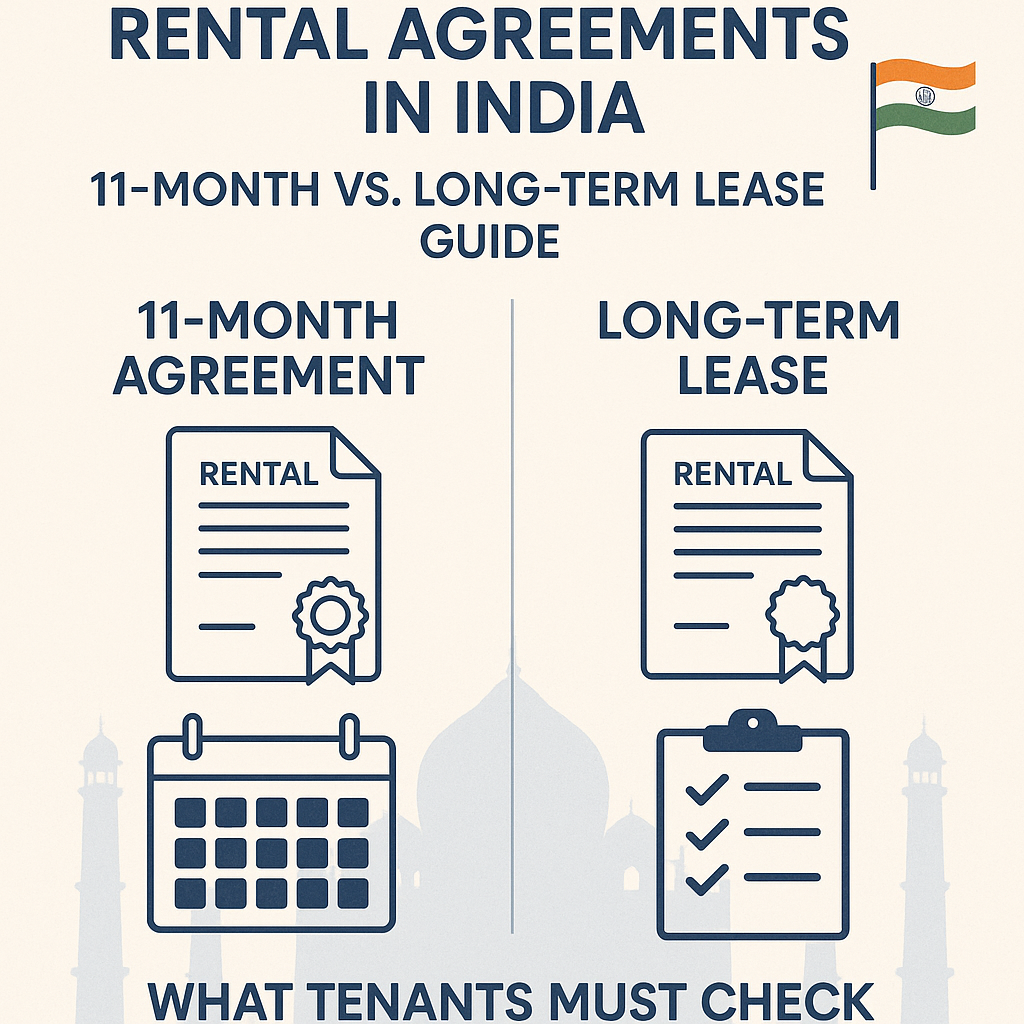
The Ultimate Guide to Rental Agreements: Why 11 Months?
In India, whether you are a landlord or a tenant, you have likely noticed a peculiar pattern: almost every standard rental agreement is drafted for exactly 11 months. Not one year, not two years, but 11 months.
Is this a magic number? Is it a superstition? No, it is a calculated legal strategy.
Navigating the rental market can be tricky. From security deposits to "lock-in periods," the fine print can cost you money if you aren't careful. This evergreen guide demystifies the Indian rental agreement and explains what you are actually signing.
1. The "11-Month" Mystery Solved
The reason is simple: Stamp Duty and Registration Laws.
- The Law: According to the Registration Act, 1908, any lease agreement for a period of 12 months or more must be mandatorily registered with the Sub-Registrar’s office. This involves paying strict Stamp Duty (which can be 1-2% of the annual rent + deposit) and Registration Fees.
- The Loophole: An agreement for 11 months does not require mandatory registration. It can simply be printed on a Stamp Paper (usually ₹100 or ₹500) and notarized.
The Benefit: It saves both the landlord and the tenant the hassle of visiting the government office and paying hefty stamp duty charges. This is why 11-month agreements are the standard for residential renting.
2. "Leave and License" vs. "Lease Deed"
Most people use the word "Lease," but in India, you are likely signing a "Leave and License" agreement. Knowing the difference is crucial for your rights.
Leave and License (The Standard)
- Definition: The landlord grants you "permission" (license) to enter and use the property.
- Ownership: No interest in the property is created. Possession remains legally with the landlord.
- Eviction: Easier for the landlord to evict a tenant once the license expires.
- Best For: Residential renting (11 months).
Lease Deed
- Definition: A transfer of the "right to enjoy" the property for a specific time.
- Ownership: Creates a legal interest in the property for the tenant.
- Eviction: Very difficult. Tenants have strong protection under Rent Control Acts and cannot be evicted easily.
- Best For: Long-term commercial rentals (5-10 years) where businesses need stability.
3. The "Lock-In Period": Don't Get Trapped
This is the most dangerous clause for a tenant.
- What it is: A specific period (e.g., the first 6 months) during which you cannot vacate the property.
- The Risk: If you leave during the lock-in period (say, you lose your job or get transferred), you are legally liable to pay the rent for the entire remaining lock-in period.
- The Fix: Always negotiate for a zero lock-in or a very short one (1-2 months). Ensure the "Notice Period" (usually 1 month) is separate from the lock-in.
4. Police Verification: It’s Mandatory
In most major Indian cities (Delhi, Mumbai, Bangalore, Pune), Police Verification of tenants is not just a safety measure; it is a legal requirement.
- For Landlords: Failing to do this is a punishable offense under Section 188 of the IPC.
- For Tenants: It creates a safety record. It is usually a simple online process where you upload your ID proof and employment details to the city police portal.
5. Security Deposit & Maintenance
- Security Deposit: In cities like Bangalore, landlords often ask for 6-10 months of rent as a deposit. In Delhi/NCR, it is typically 1-2 months.
- Tip: Always ensure the agreement states that the deposit is interest-free and fully refundable (minus damages) at the time of vacating.
- Maintenance Charges: Be clear on who pays the monthly society maintenance. Usually, the tenant pays the recurring monthly charges, while the landlord pays for any one-time "sinking fund" or major building repair costs.
Conclusion: Read Before You Sign
A rental agreement is not just a formality; it is the only thing protecting your peace of mind. Whether you are renting your first apartment or leasing out your second home, understanding the 11-month rule and the difference between a License and a Lease is essential.
Don't rely on verbal promises. Get everything—from the AC repair policy to the painting charges—written down.
Looking for a home with transparent rental terms? Browse our Verified Rental Listings. Landlords, list your property for free and get verified tenants at https://gharpe.com.